Saturday, 15 November 2014

Bucolic

Bucolic is a word that to my ear always sounds as though it should be used to describe people who are far from well: ‘we were expecting it, just before he died he had a bucolic look about him’, ‘blimey, you don’t half look bucolic’, etc. Of course it means quite the opposite and points to a world of countryside fecundity and pastoral idylls. My misapprehension of bucolic as describing ill-health is partly due, I would guess, to its phonic similarity to the word bubonic. Close in sound, distant in meaning. But perhaps the phonic similarity does suggest some instability in our truck with the countryside or at least how that countryside is often experienced.
My very first, and very vague, memory of wild nature (at the age of about 2 or 3) is a hollow tree that stood on the edge of a wood near where we lived. Perhaps I don’t really remember it so much as remember being told that this was a tree my sister and I loved. We called it the Owly tree, for reasons I can’t fully remember (perhaps an association with Owl in the Winnie-the-pooh stories). Many years later I visited this tree to see if it brought with it a wash of involuntary memories. Instead I was confronted by a small stumpy tree which looked rotten. It was also by the side of a fairly busy road and had the distinct tarnish of a petroleum-exhaust glaze. [In the mid-1980s I was living in Barnes in London and went to visit the tree that Marc Bolan crashed into when he died. It had become a shrine kept going by his many devoted fans who placed purple ribbons and sorrowful sentiments all over the trunk of the tree. All the ribbons and cards looked filthy with dirt and pollution.]
            For many people growing up in some form of peri-urbanism, this is the sort of commerce we have with the countryside. When as a child I could go out-and-about by myself, my friends and I used to go to a place that we called the Volcano. It was a sloping patch of bare earth in a scrub of woodland. It was magical to us and became our den. We thought of it as extensive, untamed, remote. In reality it existed as a strip of woodland between a main road and a housing development. Like a lot of such places there were signs of peripatetic existence: a fire, some empty cans, a newspaper, the odd piece of clothing. Such signs of occupancy conjured-up the romance of a vagabond life, but they also looked like the scene of a peculiarly nasty crime.
            The artist Stephen Willats gets something of this instability in a series of photographs he produced in 1978 for his book The Lurky Place. Willats offers us views of scrubland and unfarmed fields that could plausibly fit an idea of the picturesque. Yet these are landscape littered with signs of a life: a used paper target; the wheel from a pram. To describe this life as bucolic would be wrong unless the describer was caught in the misapprehension that the word could describe a rural world that was closer to fetid than fecund.   


Friday, 14 November 2014

Deplanning


Looking around our urban environments what is most evident is the hand of the planner. We see road systems and streets, office blocks and parks, roundabouts and street furniture. We are directed by planners, and negotiate our way through their diverse and labyrinthine work. For anyone who has lived in the same city for a while what is most noticeable is the latest planning development: the new shopping complex; a new pedestrian area; a new road. Older projects are part of our habitual world: they are what we have come to expect. Some of these older projects are clearly hanging around waiting for re-development. The sort of concrete passageways that pass under large roads are no longer considered desirable. In the late 1960s and 70s the increase in urban traffic, and the inherent problems that this created (air pollution, danger to pedestrians, snarl-ups on inadequate roads, etc.) was met with an idea of creating different levels for pedestrians and traffic. Planners imagined pedestrian-only piazzas and shopping areas, while cars zipped across the city on some other level. Usually the cars were raised above the pedestrians and shops, who were dropped into excavated sites in what turned out to be dank and unlovely walkways. For these concrete underpasses the days are clearly numbered.
But what is less visible in our towns and cities are those projects that never quite happened. In 1972-3 Bristol city council acquisitioned a large area of land close to where I live. They tore down about 500 houses and a significant number of shops to make way for what would be an outer orbital road. The road was never built. The residents of the area, who were often chronically poor, put up a valiant fight against the planners. They lost. What was left were vast tracts of nothingness, and a memory of an area once filled with shops that connected the enclaves of Totterdown and Knowle to the centre of Bristol. The demolition produced discontinuity, gaps, and a sudden jolt in the environment as you moved from the centre to what was now clearly marked-out as the periphery.
Cities are discontinuous. The process of uneven development marks out an area as on the rise or falling: one neighbourhood is high-bourgeois in one century and ghetto in the next. The planner’s job is unenviable: they are caught between ameliorating the effects of uneven-development and facilitating those forces that produce it. No wonder that planning is never simply about bringing plans to fruition. It is also about losing your nerve and giving up on one plan as you embrace another. Priorities change, personnel change. And we live with other people’s dreams and nightmares. We live a peculiar form of the future perfect where that future never came to be. It is the world articulated in the title track of Laurie Anderson’s wonderful 1982 album Big Science:

Hey Pal! How do I get to town from here?
And he said: Well just take a right where
they're going to build that new shopping mall,
go straight past where they're going to put in the freeway,
take a left at what's going to be the new sports center,
and keep going until you hit the place where
they're thinking of building that drive-in bank.
You can't miss it. And I said: This must be the place.


Wednesday, 12 November 2014

For your listening pleasure…


            Yesterday, on the train to Brighton, I found myself sitting next to a business man. Everything about him screamed ‘Business’; from his pink striped shirt, to what was left of the grey hair on his balding head (he must have only been a few years older than me, but to my deluded eyes he was from another generation). Just in case it wasn’t quite clear how deeply connected he was to the world of high-finance, his IBM ‘think pad’ laptop was attached to an Ernst and Young lanyard. Ernst and Young are a huge global financial organization that undertake financial audits, tax services and all kinds of financial advising: I was clearly in the presence of a money drone. Because I’m nosey and can’t help myself from trying to read lines of text or titles of books, I had a sneaky peak at the flow charts on his lap top, but I couldn’t make head nor tail of them. But after about an hour I did notice what he was listening to on his mp3 player: Cabaret Voltaire’s Nag, Nag, Nag from the late 1970s. Cabaret Voltaire are, or at least were, purveyors of loud, throbbing industrial noise music, often accompanied by experimental films when they played live. They were the sort of pre-post-punk band that made nearly all-other punk bands and post-punk bands seem a bit on the cute side.
            I had a vision. Perhaps all the CEOs of large companies, all the managers of Hedge Funds, all the directors of Merchant Banks were still deeply attached to the music of their late teens. I imagined mahogany panelled offices with extensive views of the Thames being inhabited by suited business men with headphones blasting out classic Fall anthems (‘the West German government sent over big yellow trains to the Teesside docks… the North Will Rise Again!’). Perhaps there were boardrooms stuffed with people undertaking acquisitions and mergers whose playlist were brimming with the caustic sentiments and sonic blasts of the Pop Group, Pere Ubu, the Au Pairs, and Blurt.
A little while later my fellow commuter changed his mp3 player to the proto-rap of Gil Scott Heron. The revolution will not be televised. Indeed.
Was this a contradiction? Were these the fifth columnists working in the market place? Were all these money drones really working to bring about the demise of capitalism (in which case they were doing a pretty impressive job)? Or was it something else; a form of mourning?
Some years ago they built a large supermarket in an area of my town that once had a large open market next to a dog track. At one point it was a thriving area. The supermarket and the other large box stores that accompanied it put paid to that. Inside the large supermarket were wall-size photo-murals depicting in sepia tones the bygone age of open-air markets. There is was no irony here, or contradiction. Just dislocation and discontinuity. This will kill that. This has killed that. Nag, Nag, Nag is the torturous cry of a de-industrialising age. It is ghost music.   

Monday, 20 October 2014

Metal Fatigue


The sociologist Bruno Latour once wrote that ‘no human is as relentlessly moral as a machine’. By this I think he meant that no human has the sort of immediate, automatic, and unflinching certainty that machines manifest. You know where you are with machines and tools: they do what they say they’re going to do; they open cans, bang in nails, vacuum clean your house. If they let you down – and they do – it is because of some systemic failure; they don’t let you down by being insincere, by going behind your back, by lying about you or by handing you over to the State Police on the strength of a bribe. When they let you down it isn’t an issue of morality.
            Basil Fawlty (from the 1970s comedy drama Fawlty Towers) functions, for the most part, at a pitch of seething fury. The narrative arc of each show moves from a state of potential joy (Basil hopes to make some money on the horses; he has a new upmarket menu; and so on) to seeing his hopes dashed on the rocks of his own overreaching social ambition, snobbery and ill-humor. In perhaps the most famous scene from the show he canes his car (that he has failed to get fixed) for being willfully disobedient, for conspiring to ruin his plans. It is a scene of anthropomorphism aimed at the inorganic (“right, you’ve asked for it” he screams when the car yet again won’t start), and it claims intentionality and consciousness for the supremely indifferent car.
            Basil Fawlty behaves irrationally: who could possibly believe that the car had it in for him? Much better, no doubt, to think that the inorganic world of tools and circuits will work just as long as they are able to, and that when a piston fails, when rubber perishes, when a connection disconnects, that this is due to the laws of entropy rather than a malevolence that has found its way into the world of things. Yet when the handlebars of a bicycle snap in two when you are hurtling downhill, or when a chair disintegrates after you’ve been sitting on it for twenty minutes, or when your computer simply won’t follow commands it has been following for several years, who can remain rational?   
Two weeks ago I bought a small kitchen knife. It is fiercely sharp. I think it could split molecules if not atoms. The first time I used it I was cutting up some lettuce (totally the wrong knife for the job) and sliced through the side of my thumb. I knew that the knife hadn’t meant to wound me: it wasn’t a vindictive knife or an angry knife, or a psychotic knife. I only had myself to blame. Yet I can’t bear to look at that knife now. I can’t forgive it and I have tucked it away at the very back of the knife drawer where it will languish unused forever. So there.

Monday, 8 September 2014

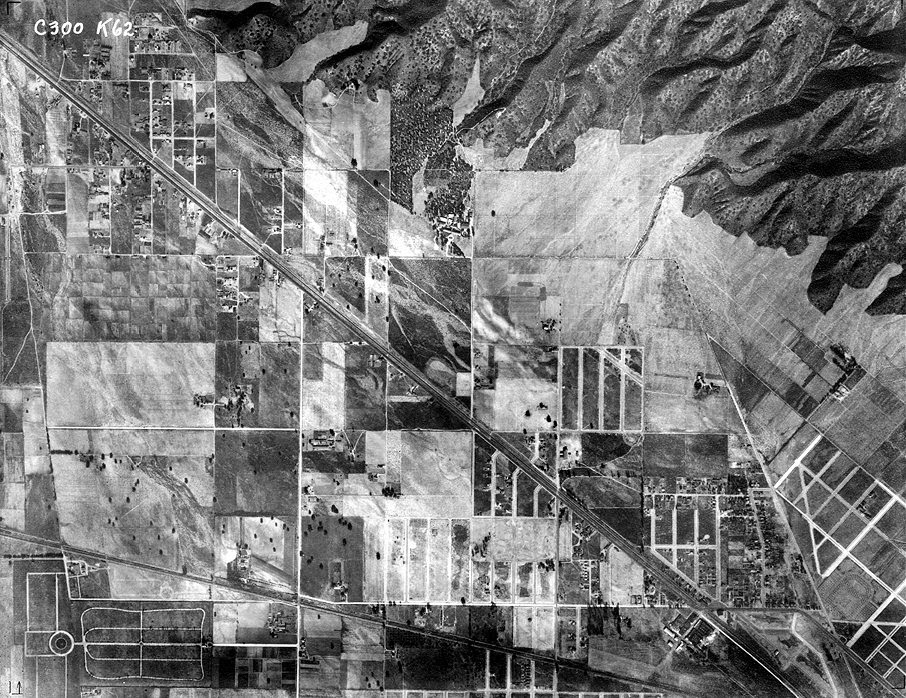
Seen From Above


In 1980 the French intellectual Michel de Certeau wrote about what it was like to look down on the streets of Manhattan from the 110th floor of the World Trade Center. De Certeau died before those towers took on the meanings that they have had since 9/11, 2001. But his point wasn't about those towers in particular. He thought that the “pleasure” of looking down on the world from a great height was due to the way that it freed you from the pulsating and ultimately unknowable hubbub taking place at ground level. The view from above was the God-like perspective which rendered the world readable at the cost of our separation from it. Cartographers, city planners, bureaucrats, and administrators viewed the world in this way because it abstracted populations and landmasses so as to render them knowable, manageable, and malleable.
There is pleasure in aerial photography and it’s hard not to see this as connected to its power to abstract. Aerial photographs have a special kind of beauty because they both register the world and offer us a view of that world that most of the time is unavailable to us. We find it hard to connect the photographs to a world that we know: much easier to enjoy the patchwork, the shapes, the lines cut by rivers or roads. That this perspective has been associated with death, with killing is of course unavoidable. The Orson Wells character in The Third Man justifies his racketeering in dodgy pharmaceuticals with the view from the top of a Ferris-Wheel in Vienna. “Look down there” he says “Would you really feel any pity if one of those dots stopped moving for ever? If I said you can have twenty thousand pounds for every dot that stops, would you really, old man, tell me to keep my money - or would you calculate how many dots you could afford to spare?”
In a book of aerial photography that was published in 1953 (Our World from the Air: An International Survey of Man and his Environment) a foreword claims that the twentieth century is the century of the air in the same way that the 19th century was the century of the railway. Because the echo of the Second World War was still reverberating loudly it at once recognises that mechanical flight had allowed humans to drop thousands and thousands of bombs on each other, but wanted to push the reader into thinking about how aerial photography could be used by “the geologist, the archaeologist, the town-planner, the sociologist”.
Today when so many more people have had the experience of mechanical flight, aerial photography still offers an uncanny vision of the world. The view of the world you get from your budget airline passenger seat is never really vertical (unless something has seriously gone wrong) and is always mediated by the slightly cloudy double-glazing of the tiny windows. Aerial photographs have a calmness that is never available in the cramped seating of economy class.
They seems to speak more readily of some of the experiences of the young flyers who became pilots during the Second World War:

The physically amazing thing about flying, after the speed impression of taking off and low flying, is that as you gain height the sense of motion drops away. It’s nothing like looking out of the railway carriage and seeing the blurry silver worms zipping past or the ritual nodding of telegraph lines. It is impressively stable and still up there and this is the important point, the world is laid out for you in unfamiliar terms… the visual field is flattened more after the plan view of the microscope section than the elevation that everyday seeing is accustomed to.

This is the artist Nigel Henderson remembering his experience of flying. It was an experience that went from enormous pleasure to nerve-wracking fear. However familiar it may become, and however it is used for instrumental ends, the view from above is also always vertiginous and discombobulating. A god-like view is the view of someone who has no place. The view from above is also the view of someone falling to earth.

Thursday, 4 September 2014

Apocalyptic Wallpaper


In North America in 1952 the critic Harold Rosenberg coined a phrase – ‘Action painters’. Action painters referred to those who today are more usually termed abstract expressionists: Jackson Pollock, Lee Krasner, Mark Rothko, and so on. Rosenberg wanted us to recognise these artists as performing an existential act in the studio. He had some words of warning too. He warned that abstract artists could end up producing nothing more than ‘apocalyptic wallpaper’ if they weren’t careful. The fear of wallpaper and domestic design is everywhere in American abstraction at this time. Mark Rothko, for instance, somewhat earlier, reckoned his paintings ‘must insult anyone who is spiritually attuned to interior decoration; pictures for the home; pictures for over the mantel’. Likewise the critic Clement Greenberg was constantly wringing his hands at the way that certain artists could descend into the decorative as if it were a bad case of the ‘dreaded lurgy’.
Across the Atlantic there didn’t seem to be such a fear of the decorative, nor of the domestic. For instance in 1955 the sculptor and collagist Eduardo Paolozzi with his friends Nigel and Judith Henderson set themselves up as a firm to produce wallpaper, textiles, furniture and so on. The firm was called Hammer Prints Ltd. Paolozzi was at the time having a huge success with his sculpture. I like to think that British artists like Paolozzi (and by British I mean Scottish-Italian-British) had read Harold Rosenberg’s essay on action painting, and instead of heeding the warning about apocalyptic wallpaper decided that that was precisely what they wanted to do. What, after all, would it be like to live in house papered with apocalyptic wallpaper?
One of my favourite set of paintings is by the wonderful artist Susan Hiller. I saw an exhibition of her work at the ICA in London in the late 1980s. One of the exhibits was a series of works of paint on the wallpaper used to paper children’s bedrooms: wallpaper featuring parachute jumpers floating through the sky, or action heroes, or cute aliens. These were the gendered wallpapers of a different sort of action: masters of the universe saving the world – not so much existential actors as testosterone-fuelled maniacs. The paint obliterated most of the figuration, but allowed snippets to poke through. The painting used scaled-up images of Hiller’s automatic writing. In some of the paintings it looked like the male action figures were drowning in an unconscious patterning of paint.
For a while I was an abstract painter. My dad used to say that my paintings would look really good in the corridors and boardrooms of a large corporation. I think he was imagining the money that might come my way if I could snag such a commission, but he was also keying into the way that the corridors of power for a while at least, loved the sort of tasteful abstraction that looked simultaneously expensive and inoffensive. I think he also couldn't imagine anyone in their right mind buying one my paintings for their home. 


Wednesday, 3 September 2014

Foreign Holidays


When I was about eleven my parents took my sister and I on a driving holiday on ‘the continent’ (as we called mainland Europe). Over two weeks we dashed from one picturesque town to another across France, Germany, Luxembourg, Switzerland and Italy staying in an uneven range of small hotels. We were ill-equipped for such travel in the early 1970s because no one apart from my sister could speak another language, and she was always too shy or too stubborn to lend a linguistic hand. On one occasion, in a small German town, my dad dropped us off at a restaurant, parked the car and came to find us. He had made a note of the name of the street and so after the meal we went to look for the car in Einbahnstrasse. We found what we thought was the street but there was no car there. It was only by luck that we chanced upon the car in another street, and eventually understood that Einbahnstrasse didn't name the street just its condition of one-way-ness.
It was a holiday that was organised by a travel agent; a sort of package-holiday for people who don’t know how to relax (or are a bit suspicious of such hedonism). So we would keep bumping into the same fraught British families as we raced from one destination to the next. It was an era before air-conditioned cars where the seats were nearly always plastic, and where parking a car in a non-shady spot would result in the interior taking on an almost molten state (car rugs were needed to protect bare flesh from being fused to the fiercely hot seats). It was a holiday punctuated with travel-sickness, sullen silences (we took turns and picked up the slack left my dad’s endless optimism), and new experiences. Continental food, even in tourist-ready hotels, could prove tricky and my sister, who had been warned-off eating anything at all by a barmy xenophobic school teacher, maintained a strict ascetic diet of bread and fizzy drinks. And the fizzy drinks were a highlight – who knew that fizzy drinks could taste of apple, or that fizzy orange didn't have to have a radioactive colour and a flavour that made pure sugar taste bitter?
These days the frisson of difference doesn't seem so extreme. I notice it most in the small details. The pylons and telegraph poles are different. The grass is thicker, coarser, more springy. The street signs are placed differently. There are less road markings. The advertising hoardings seem to articulate different causes for commodity-based happiness.